


Business System Integration Australia: The Biggest Business Problem Is Often Not the Software—It’s That Nothing Works Together
A manufacturing company buys a CRM to improve sales visibility.Business System Integration Australia
The finance department introduces new accounting software.
Operations adopt a separate inventory platform.
Marketing launches an email automation system.
Customer service begins using a helpdesk application.
Individually, every decision makes sense.
Collectively, the business becomes more complicated.
Instead of one connected workflow, employees move information manually between systems. Customer details are entered multiple times. Reports rarely agree with one another because every department works from different data. Management meetings become discussions about which spreadsheet is correct rather than which decision should be made.
This situation is becoming increasingly common across Australian businesses.
Professional Business System Integration Australia is not about replacing every application a company already owns. It is about allowing those applications to exchange information reliably so employees spend less time managing systems and more time managing the business itself.
Every Department Optimises Its Own Work
One of the most common mistakes organisations make is selecting software independently.
Sales chooses the platform that improves pipeline management.
Finance chooses the accounting package that simplifies reporting.
Marketing selects the campaign platform with the strongest automation.
Operations focuses on inventory accuracy.
Each department improves its own efficiency.
Unfortunately, very few people ask a different question.
How will all these systems communicate?
Professional Business System Integration Australia begins with understanding how information moves through the organisation instead of analysing each application separately.
Technology should follow business processes—not departmental boundaries.
Data Should Have One Home
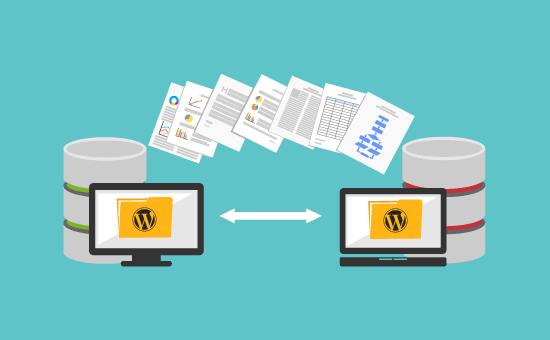
Customer information is often copied between multiple systems.
A company name may exist inside:
- CRM software
- Accounting software
- Ecommerce platform
- Email marketing platform
- Customer support software
- Internal spreadsheets
Eventually these records become different.
One system contains the new address.
Another still contains an old phone number.
Someone changes the company name in one platform but forgets the others.
Professional Custom Software Integration encourages organisations to define one authoritative source for every important type of information.
For example:
Customer details belong inside the CRM.
Financial transactions belong inside accounting software.
Inventory belongs inside the warehouse management platform.
Other systems should retrieve or synchronise this information instead of maintaining independent copies whenever possible.
Automation Should Remove Decisions Nobody Wants To Make
Automation is often misunderstood.
Many businesses attempt to automate complicated judgement rather than repetitive administration.
Professional Business Automation Solutions focus on removing work that employees perform repeatedly without adding business value.
Examples include:
- Creating customer records.
- Sending order confirmations.
- Assigning support tickets.
- Updating inventory.
- Moving approved quotations.
- Creating project workspaces.
- Scheduling onboarding tasks.
Employees still make important commercial decisions.
Automation simply removes the repetitive actions surrounding those decisions.
APIs Are Business Tools, Not Developer Features
When business owners hear the term API, they often assume it is purely technical.
In reality, APIs simply allow different systems to exchange information automatically.
Professional API Integration Services may allow:
A website enquiry to create a CRM lead.
An approved quotation to generate a project.
Completed orders to update inventory.
Customer payments to appear inside accounting software.
Support tickets to notify account managers.
Employees may never know an API exists.
They simply notice that information appears where it should without someone manually copying it.
Integration Projects Usually Fail Because Processes Are Unclear
Technology rarely causes the first problem.
Business processes do.
During integration workshops, organisations often discover that different employees complete the same task differently.
Sales follows one approval process.
Finance follows another.
Operations uses a third.
Professional Business System Integration Australia therefore documents workflows before writing any code.
Important questions include:
Who owns this information?
Who approves this action?
What happens when exceptions occur?
Which department becomes responsible next?
Software cannot automate a process that the organisation itself has never agreed upon.
Not Every Integration Needs Real-Time Synchronisation
Many businesses assume information must update instantly.
Sometimes this is essential.
Sometimes it creates unnecessary complexity.
Professional Enterprise Integration Australia evaluates how quickly information actually needs to move.
Examples:
Inventory may require near real-time updates.
Marketing reports may update every morning.
Financial reconciliation may occur overnight.
Management dashboards may refresh hourly.
Choosing the appropriate synchronisation frequency often reduces infrastructure costs while maintaining business performance.

Integration Also Changes Accountability
When systems become connected, responsibilities change.
Previously, employees might manually review information before entering it elsewhere.
Automation removes that checkpoint.
Professional Business System Integration Australia therefore introduces validation earlier in the workflow.
Instead of correcting mistakes after data has spread through several systems, the business improves information quality before integration begins.
Good integration encourages better operational discipline.
Employees Need Visibility, Not Complexity
Many integration projects fail because users suddenly face dozens of new screens and dashboards.
Professional Business Automation Solutions aim for the opposite.
Employees should need fewer systems, not more.
A salesperson should not have to check five applications before contacting a customer.
A warehouse manager should not compare three reports before shipping an order.
Integration should quietly reduce operational complexity.
The best integrations are often invisible.
Employees simply notice that information appears where it is expected.
Integration Should Continue Supporting Growth
Businesses rarely stop changing.
New offices open.
New software is introduced.
Acquisitions occur.
Product ranges expand.
Professional Business System Integration Australia should therefore avoid creating one large collection of custom code that nobody understands two years later.
Instead, integrations should follow clear documentation, modular architecture and consistent standards.
Growth should require extending the platform rather than rebuilding it.
Choosing an Integration Partner
Businesses often compare integration providers by development cost alone.
A more valuable question is whether the provider understands business operations.
Professional Business System Integration Australia requires discussions about workflows before APIs.
A suitable partner should ask:
Where does information originate?
Who owns each process?
Which exceptions occur regularly?
How will future software be added?
How will integrations be monitored?
Technology decisions become much easier after these operational questions have been answered.
Conclusion
Professional Business System Integration Australia helps organisations reduce duplicated work by allowing systems to share reliable information instead of forcing employees to move data manually.
Through structured API Integration Services, practical Business Automation Solutions, scalable Custom Software Integration and carefully planned Enterprise Integration Australia, businesses can simplify operations without replacing every existing application.
The most valuable integration projects are not remembered because they introduced impressive technology.
They are remembered because everyday work became noticeably simpler, faster and more reliable.